




Travel News
Why US is placing travel ban on Nigeria, 25 other African countries - THE GUARDIAN
By : Olayide Soaga
The United States’ travel restrictions on 39 countries, including Nigeria, took effect on January 1, 2026.
US President Donald Trump had earlier announced entry restrictions on citizens of selected countries, barring or limiting their access to the United States.
Since returning to the White House, Trump’s administration has tightened immigration rules. In June, Trump signed an executive order restricting citizens of Afghanistan, Myanmar, Chad, Congo-Brazzaville, Equatorial Guinea, Eritrea, Haiti, Iran, Libya, Somalia, Sudan and Yemen from entering the US.
According to the White House, the latest restrictions form part of broader efforts to control immigration and protect the United States from perceived threats to its safety and security.
Of the 38 countries affected by the restrictions, 26 are located in Africa. Twelve African countries are under full suspension, while the remaining 14 face partial restrictions.
African countries under full suspension
Burkina Faso: The White House said the travel ban on Burkina Faso was imposed due to the activities of terrorist groups in the country, its refusal to accept citizens deported from the US, and a high visa overstay rate.
Mali: The US cited ongoing conflict between the Malian government and armed groups, as well as terrorism, as justification for the full suspension of entry for Malian nationals.
Niger: The junta-led West African country is grappling with terrorism and widespread abductions. The White House cited terrorist activity and a high visa overstay rate among Nigerien nationals.
Sierra Leone: According to the White House, Sierra Leone has a visa overstay rate of 35.83 percent. It also noted the country’s history of rejecting citizens deported from the United States.
South Sudan: The White House said the travel ban was imposed due to South Sudan’s failure to accept deported nationals and the high visa overstay rate of its citizens.
African countries under partial travel restrictions
Angola: Citizens of Angola recorded a B-1/B-2 visa overstay rate of 14.43 percent and an F, M and J visa overstay rate of 21.92 percent, figures cited by the White House to justify the restrictions.
Benin: The US imposed partial restrictions due to Benin’s B-1/B-2 visa overstay rate of 12.34 percent and an F, M and J visa overstay rate of 36.77 percent.
Côte d’Ivoire: The White House said Côte d’Ivoire’s B-1/B-2 visa overstay rate of 8.47 percent and F, M and J visa overstay rate of 19.09 percent warranted partial restrictions.
Gabon: Gabon was listed due to its B-1/B-2 visa overstay rate of 8.47 percent and an F, M and J visa overstay rate of 19.09 percent.
The Gambia: Data from the US Overstay Report showed that The Gambia had a B-1/B-2 visa overstay rate of 12.70 percent and an F, M and J visa overstay rate of 38.79 percent. The White House also cited the country’s refusal to accept deported nationals.
Malawi: According to the Overstay Report, Malawi recorded a B-1/B-2 visa overstay rate of 22.45 percent and an F, M and J visa overstay rate of 31.99 percent.
Mauritania: Mauritania’s B-1/B-2 visa overstay rate stood at 9.49 percent. The White House said limited government presence in parts of the country has created significant screening and vetting challenges.
Nigeria: The White House cited the activities of terrorist and armed groups in Nigeria as factors creating substantial screening and vetting difficulties. It also noted that Nigerian nationals had a B-1/B-2 visa overstay rate of 5.56 percent and an F, M and J visa overstay rate of 11.90 percent.
Senegal: Senegal recorded a B-1/B-2 visa overstay rate of 4.30 percent and an F, M and J visa overstay rate of 13.07 percent, according to the White House.
Tanzania: US data show that Tanzania had a B-1/B-2 visa overstay rate of 8.30 percent, while the overstay rate for F, M and J visas stood at 13.97 percent.
Zambia: Figures from the US Overstay Report indicate that Zambia recorded a 10.73 percent overstay rate for B-1/B-2 visas and 21.02 percent for F, M and J visas.
Zimbabwe: Zimbabwe’s B-1/B-2 visa overstay rate was 7.89 percent, with F, M and J visa overstays reaching 15.15 percent.
Canada announced new ‘fast track’ system for permanent residency for 5,000 foreign doctors
While more than 6 million Canadians live without a family doctor, the government of Canada is finally making strides to increase the number of physicians in Canada. Ottawa announced a new “express entry” category for foreign-trained physicians in an effort to address health workforce challenges in Canada. Minister of Immigration, Refugees and Citizenship Lena Metlege Diab said in a press conference, “We’ve seen the strain in our emergency rooms, we hear it from families waiting for a doctor, and we feel it from the front-line staff who are stretched thin. We’ve heard a clear message from patients, provinces and the medical community, we need more hands on deck,”
While more than 6 million Canadians live without a family doctor, the government of Canada is finally making strides to increase the number of physicians in Canada. Ottawa announced a new “express entry” category for foreign-trained physicians in an effort to address health workforce challenges in Canada. Minister of Immigration, Refugees and Citizenship Lena Metlege Diab said in a press conference, “We’ve seen the strain in our emergency rooms, we hear it from families waiting for a doctor, and we feel it from the front-line staff who are stretched thin. We’ve heard a clear message from patients, provinces and the medical community, we need more hands on deck,”
Doctors with work experience
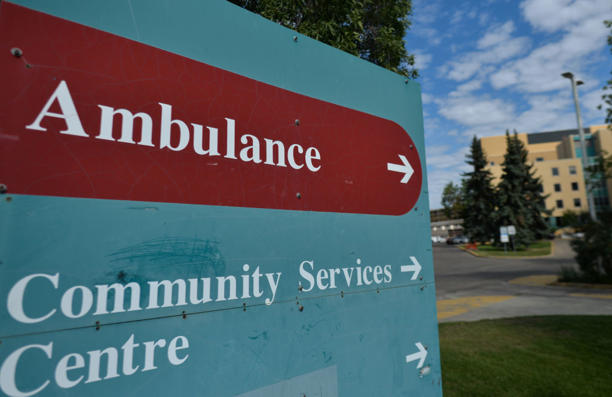
The new measures target internationally trained doctors with at least one year of Canadian work experience gained within the last three years, meaning only doctors who have already passed their Canadian equivalency exams will be able to benefit from this new program. a press release from Immigration, Refugees and Citizenship Canada (IRCC) said “We’re giving these doctors a clear pathway to permanent residence in Canada to fill critical health workforce gaps, while helping support reliable care and a stable health system for Canadians,” Per a 2025 CBC investigation, there are currently an estimated 5,000 foreign-trained doctors in Canada, the vast majority of which are not practicing medicine in Canada due to restrictions on internationally trained physicians (ITPs). According to CMA president Dr. Margot Burnell, there are actually "more than 13,000 internationally trained physicians in Canada not working in their field."
Holes in healthcare
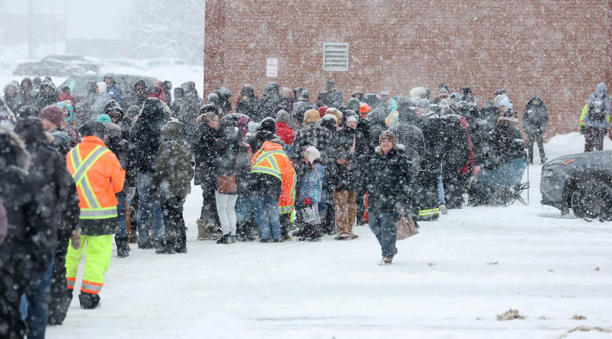
According to a 2025 investigation from Dr. Tara Kiran along with the Canadian Medical Association, there are currently 5.9 million Canadians who do not have a primary care physician (family doctor), CMA president Dr. Burnell state in the report, “These findings confirm what physicians and patients across Canada are experiencing daily,” Dr. Burnell mentioned how in 2022, there were 6.5 million Canadians without a primary care physician, and, “while we’ve made progress, too many Canadians still face unacceptable barriers to primary care. We can do better. We know the solutions. Access to care for all Canadians is a realistic and achievable goal now.”
Number of Canadians without a Dr
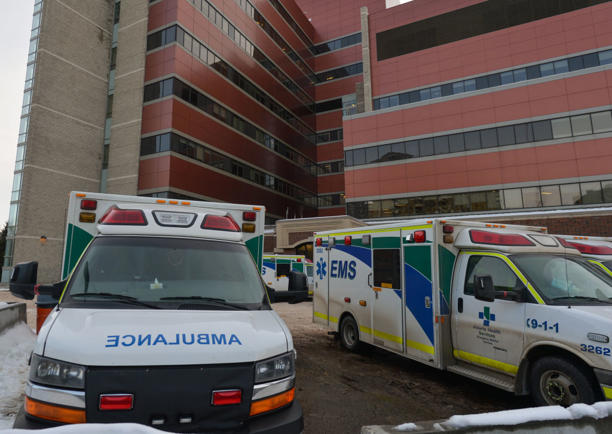
While the number of Canadians without a primary care physician has dropped from 6.5 million to 5.9 million since 2022, 5.9 million people still represent almost 15 per cent of the country, meaning 3 in every 20 Canadians don’t have a family doctor. While Northern communities struggle with finding full-time physicians to move to remote areas of the country, populated areas of the country are also experiencing a shortage in medical staff. Reportedly, only two-thirds of qualified physicians in British Columbia are practicing medicine, leading to some of the longest ER wait times in the country – even in highly populated areas like Victoria, BC (population of 91,000). It’s estimated that almost 30 per cent of BC residents do not have a primary care physician – a total of nearly 700,000 Canadians. Another example is the border city of Sarnia, Ontario, with a population of almost 80,000, of which approximately 10,000 lack a primary care physician. According to BC Premier David Eby,
"We want B.C. to be a place where health care is always there for you, which is why we’re taking action to hire more family doctors and health professionals than ever before, We’re starting to see some good results, but there’s a lot more we need to do. We can’t afford to slash health-care budgets when we need to be hiring even more doctors and nurses so B.C. families get the care they need when they need it.
A step in the right direction
Health care experts stress that this program is a step in the right direction, but the program will not fix all of Canada’s healthcare problems, with Maggie Chi, Parliamentary Secretary to the Minister of Health stating: “Attracting skilled health professionals is essential to addressing Canada’s health workforce shortages. Increasing the number of qualified physicians with the expertise our health care system needs will ensure people across the country receive timely, high-quality care. By working closely with provinces and territories, we are tackling workforce challenges and strengthening the health care system so Canadians receive the care they need, when they need it.”
Met Office issues ‘risk to life’ weather warning as snow to blanket UK -
BY Tara Cobham
Weather alerts in parts of Scotland have been upgraded from yellow to amber by the forecaster, while yellow warnings are in place elsewhere as people face a wintry start to the new year.
Up to 40cm of snow could hit some places in Scotland, while winds could lead to temporary blizzard conditions, bringing possible travel chaos, power cuts and “the potential risk to life and property”, according to the weather service.
Advertisement
The upgraded warnings cover parts of the Highlands and northeast Scotland, with frequent and prolonged heavy snow showers expected between noon on Friday and noon on Saturday.
Forecasters said some delays and cancellations to rail and air travel are likely, as are power cuts and disruption on the roads, while some rural communities could become cut off.

Snow and ice are forecast across much of the UK for the start of the new year, according to the Met Office, with temperatures on New Year’s Day not expected to climb above 5C in Belfast, 7C in London, 6C in Manchester, 3C in Edinburgh and 8C in Cardiff.
The UK Health Security Agency (UKHSA) has also warned of a potential surge in deaths, as it issued more severe warnings across England for the cold snap.

The UKHSA previously issued amber cold health alerts in the North East and North West of England. And now yellow alerts have been upgraded to amber in the East Midlands, West Midlands, South East, South West, East of England, Yorkshire and the Humber, and London. These warnings are in place until 10am on 6 January.
The agency warned it means the weather is “likely” to cause significant impacts across health and social care services, including a “rise in deaths” among those with health conditions or aged 65 or over.
Weather warnings are already in force on 1 January in Scotland, with a yellow warning of snow and ice covering the northern part of the country. The Met Office predicts 2-5cm could be lying by Thursday evening, with 10cm accumulating by Friday morning, while up to 20cm could build up above 200 metres.

The warning is in force until midnight on Friday, and at the weekend it extends further south, covering the area down to Perth and southerly parts of Argyll and Bute until midnight on Sunday.
Meanwhile, on Friday, a yellow warning for snow and ice was issued across large parts of England and Wales between midnight and noon, including Chester and Greater Manchester down to London and Kent. Up to 5cm of snow could blanket some areas, especially on higher ground in parts of North Wales and northwest England.
Separate yellow warnings are in place for Northern Ireland between midnight and 10am on Friday.
Then, on Saturday, there is another snow and ice warning for northern Scotland, which lasts from midnight Friday until midnight Sunday.

Meanwhile, a snow and ice warning covering parts of northeast England comes into force from midnight Friday until midnight Saturday.
People have been urged to prepare for longer journey times by road, and on bus and train services. The forecaster has also warned of injuries due to slips and falls on icy surfaces, which will develop quickly as sleet and snow clears.
A Met Office spokeswoman said: “This warning highlights the risk of disruptive snow showers and icy surfaces, particularly in northern and eastern areas, with impacts on travel and potential hazards for the public.
“We expect this cold spell to persist into the weekend and on into next week, with further warnings possible as temperatures remain well below average and snow showers continue in places.”

Dr Paul Coleman, consultant in health protection at the UKHSA, said: “The weather is forecast to be very cold across England over the coming few days.
“Low temperatures like these can have serious impacts on the health of some people, particularly older people and those with serious health conditions. Exposure to cold can lead to increased risk of heart attacks, strokes and chest infections.
“It is therefore really important, as the colder weather sets in, to check in on friends, family and neighbours that are most vulnerable.”
New visa rules for 2026: The UK immigration changes in the new year - EVENING STANDARD
New immigration rules are set to come into force in 2026, marking one of the most substantial overhauls of the system in years.
Under plans to reduce net migration there will be changes to visas, including significantly increasing English language requirements for foreign workers.
The measures, which build on those set out in the Government's immigration white paper in May, are designed to make it more difficult for some migrants to come to Britain.
Here are the changes set to take place in the new year:
Visas
English language requirements for some major work-related visas will increase.
From January 8, 2026, many migrants will need to speak English to an A-level standard under tougher new rules.
The change will impact graduates and those applying for skilled worker or scale-up visas, which are for those employed by fast-growing businesses.
To be approved, a person will have to demonstrate B2 level English, the equivalent to upper-intermediate or A-level standard, instead of the previous B1 level.

The new rule will apply only to new, first-time applicants. Existing visa holders extending their permission to stay in Britain will not face the higher requirement.
The measure was first announced by Home Secretary Shabana Mahmood in October. She said: "If you come to this country, you must learn our language and play your part… It is unacceptable for migrants to come here without learning our language, unable to contribute to our national life."
Settled Status
At the centre of the Government’s immigration reforms is the introduction of a new “earned settlement” model, which will alter the way migrants qualify for permanent residency in Britain.
The Home Office earlier this year announced the qualifying period for Indefinite Leave to Remain will be extended from five to 10 years.
But some could be waiting for up to 20 years.
The measures will apply to the estimated 2.6 million people who have arrived in the UK since 2021. People who have already obtained settlement will not be affected.
Settlement or Indefinite Leave to Remain allows someone to live in the UK permanently, work and access public services without restrictions. It is also a key step towards gaining British citizenship.
Legal migrants who claim benefits for less than 12 months will have to wait 15 years for settled status, while those reliant on benefits for longer face a 20-year wait.
People who arrived on post-Brexit health and social care visas could also have to wait 15 years, up from five.
The changes are expected to come in from spring 2026, after a Government consultation ends in February.
Gatwick Airport becomes UK's most expensive for drop-off fees as it hikes charges to £10 - DAILY MAIL
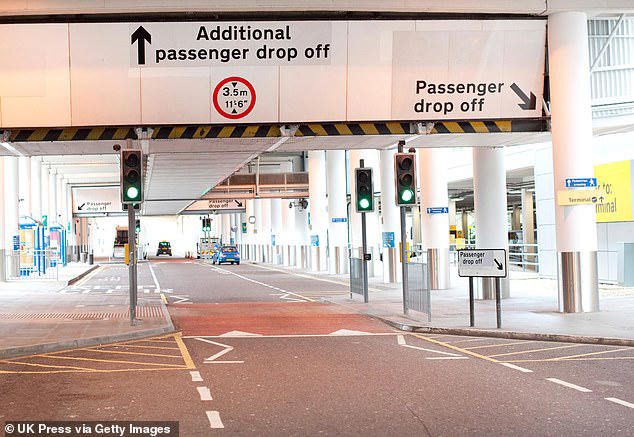
Gatwick Airport will tomorrow become the UK's most expensive airport for drop-off fees as it hikes charges to £10.
London City Airport is also set to introduce a drop-off fee of £8 and Bristol Airport also increased its cost by £1.50 as of today, bringing the total to £8.50.
Gatwick currently charges £7 per entry to the drop-off zone which is enforced by automatic number plate recognition (ANPR) cameras at the entrance to the airport.
But from tomorrow, the charges will rise by some 43 per cent to £10 for the first 10 minutes.
The price hike, which brings them well ahead of any other UK airport's fees, has been defended by the airport - blaming the increase on higher operating costs, stoked by Chancellor Rachel Reeves' rising business rates.
A spokesman for Gatwick said: 'This increase in the drop-off charge is not a decision we have taken lightly.
'However, we are facing a number of increasing costs, including a more than doubling of our business rates.
'The increase in the drop-off charge will support wider efforts to encourage greater use of public transport, helping limit the number of cars and reduce congestion at the entrance to our terminals, alongside funding a number of sustainable transport initiatives.'
It is still possible to avoid the fee when dropping people off at the airport by going to the long stay car park where travellers can then catch the free shuttle bus to the flight terminals.
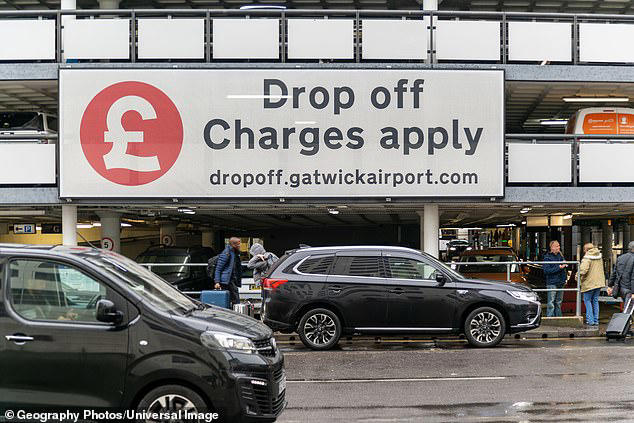
Blue badge holders will also be exempt from the drop-off charge at both Gatwick and London City Airports, as before.
However, the charge will likely be added to taxi and minicab fares.
When it was initially introduced, the drop-off fare was £5 in March 2021.
Airports will be hit very hard by the increase in business rates from Rachel Reeves' November budget which is due to come into effect this April.
Gatwick is expected to see an £11.9million hike in its business rates bill, bringing the total to £51.6million in the 2026-27 tax year, according to the Valuation Office Agency (VOA) data by global tax firm Ryan.
Heathrow is also due a massive hammer blow in business rates with a gigantic increase of £35million, bringing their bill to £151.5million for 2026-27. The airport has also increased its drop-off charge from £6 to £7 as of January 1.
These massive hikes in tax also take into account the 30 per cent cap on increases in place for business rates under transitional relief which the government has allocated £4.3billion towards.
A government spokesperson told the BBC: 'We're delivering a £4.3bn support package to cap business rates bill increases at 30% before other reliefs for the largest properties, including airports. Without intervention those would be up to 500%.'
Rod Dennis, senior policy officer at the RAC, which tracks airport drop-off fees, spoke about the fee increase at Gatwick.
He told AOL: 'A more than 40 per cent increase in the cost to drop-off is the largest we've ever seen and represents a doubling of the fee first introduced in 2021.'
Adding: 'Drivers tell us the main reason they use drop-off facilities at airports is to help people with bulky or heavy luggage – something that can be incredibly impractical on public transport, especially if elderly relatives or young children are in tow.
'Sadly, it looks like drivers are going to have to get used to coughing up increasingly exorbitant sums for doing so.'
Drop-off fees are 'almost unheard of' at other major European airports, Mr Dennis pointed out.
London City Airport was the last of the UK's top 20 airports not to have a drop-off fee, but, as of tomorrow, January 6, announced they would be introducing an £8 charge for the first five minutes, then an extra £1 for any additional minutes with a maximum stay of 10 minutes.
The charge is meant to 'help London City meet its wider sustainability goals by reducing the number of vehicles travelling to and from the airport', an airport spokesperson said, helping contribute to Sadiq Khan's plan for 80 per cent of journeys in the capital to be done by walking, cycling or public transport by 2041.
Only around 10 per cent of travellers who use the airport arrive by car currently, with two thirds coming in via public transport.
The charge will also be added to taxi fares, the airport said.
Mr Dennis said: 'For drivers, this is an unwelcome watershed moment. It's enormously disappointing to see the airport introduce a drop-off fee, the last of the UK's top-20 airports do so.
'Compared to many, London City has excellent public transport connections so arguably most people dropping off are only those that really need to.
'The demise of free airport drop-offs in the UK is in sharp contrast to what's normal elsewhere in Europe, with RAC analysis earlier this year finding eight of the EU's top-10 airports by passenger numbers still allowing drivers to say goodbye to friends and loved ones at terminals free of charge.'
Bristol Airport is joining the trend in hiking drop-off charges, increasing theirs from £7 to £8.50 from today, making it the second most expensive in the country after Gatwick's.
They too blame Rachel Reeves' hikes in business rates as the reason behind the increase.
Those using the drop-off zone and attending the short stay car park, a short walk from the terminals, will incur the £8.50 charge.
Parking charges in the Minibus and Over Height car park at the airport will also go up from £7 to £8.50 for five minutes, and from £9 to £10.50 for five to 20 minutes.
Blue badge holders dropping off family and friends will still be allowed to use the drop-off car park for up to 40 minutes, but for an increased cost of £8.50.
An airport spokesperson said that the new business rates would become its 'single biggest non-operational cost'.
How much does cold weather affect the range of electric cars? - YAHOO NEWS
Winter temperatures are known to reduce battery efficiency in EVs, potentially fuelling 'range anxiety' among buyers. But how much of a problem is it really?
BY James Hockaday
The number of motorists opting to buy an electric vehicle in the UK continues to rise.
More than 470,000 electric cars were registered in 2025, according to the Society of Motor Manufacturers and Traders (SMMT) - up 23.9% on 2024.
Indeed, pure battery EVs achieved a market share of 23.4%, which is expected to place the UK as the second largest market in Europe, behind Germany
It comes as the UK government attempts to encourage more people to make the switch to EVs, offering a discount of up to £3,750 for certain models.
Advertisement
However, there are still some drawbacks of electric vehicles, including how they handle cold weather, with research by insurance provider AXA showing battery health is a major concern putting off would-be buyers.
As the UK endures a bitter cold snap, this will be at the forefront of many electric vehicle owners – but how bad is the cold weather for EV batteries really?
Is cold weather bad for electric cars?
Cold weather can affect your car's electric battery in a number of ways, as explained by BP Pulse, which supplies charging infrastructure for electric vehicles.
Lithium-ion batteries rely on chemical reactions to generate power, and "cold weather slows down these reactions", making batteries less efficient, the vehicle charging network says.
The cold weather drains batteries in electric vehicles in other ways that don't apply to traditional fuel-powered cars, it adds.
"Unlike a petrol or diesel car that uses waste engine heat to warm the cabin, EVs have to draw power directly from the battery for heating and demisting the windscreen. This can be one of the biggest factors in reducing your range."Furthermore, to "perform optimally and charge at speed" your EV's battery pack often needs to be warmed up, BP Pulse says.
"Your car’s thermal management system uses energy from the battery to do this, which could reduce range, especially before charging or at the start of a journey," it adds.
How much range does an EV lose in the cold?
Modern EVs in the UK typically lose between 10-30% of their range when the temperature falls below 5C, according to electric vehicle platform ONEEV.
It says the most reliable data on this comes from cold-weather testing by independent organisations such as the RAC and Auto Express, and says the results align with findings of Scandinavian tests taken in harsher winters.
EV charging and sustainable energy business Gridserve suggests losses of 10-20%, meaning that "for a car with 200 miles range on a nice day, on a frozen winter morning you’re more likely to get 160 miles".
However, ONEEV points out that petrol and diesel cars are also less efficient in the winter, often using up to 15% more fuel, although drivers rarely notice due to the size of their tanks.
In contrast, EV drivers might notice the difference more clearly on their dashboard display.
Do electric cars charge in freezing weather?
Yes, your EV can still be charged in freezing weather, but at a slower rate.
"A cold battery can’t accept a charge as quickly as a warm one," says BP Pulse.
"When you plug into a rapid or ultrafast charger on a freezing day, some of the initial energy may go into warming the battery before your car can charge at its fastest rate."
As EVs draw more energy in cold weather when the battery is very low, ONEEV advises drivers to charge their batteries before they drop below 20% to maximise efficiency.
Online car marketplace Carwow advises drivers to "use slow charging whenever practical" to protect their car's battery during the winter, as this is "better for battery life".
"You should also keep the battery between 20% and 80% charged, only charging to 100% if you must for a long journey," it adds.
Is it getting better?
Yes, according to EV research site Recurrent, which wrote in November 2024 that heat pumps, a newer and more efficient type of heater, can improve driving range during the winter by 8-10%.
Resistive heating units that many EVs have been relying on generate 1 unit of heat for every unit of electricity used, the site adds, while heat pumps can generate 3-4 units.
The Electric Car Scheme, which allows workers to save money on EVs through salary sacrifice, claims heat pumps can improve winter range by 10-30% compared to traditional resistive heating systems.
It says the efficiency benefits of heat pumps are "most noticeable in temperatures between -5C and 15C, making them particularly valuable in the UK climate".
The scheme adds that premium electric vehicles from Tesla, BMW, and Audi now include advanced heat pump technology as either standard or optional equipment.
Should it put people off buying an EV?
Despite improvements in technology, many drivers in the UK still appear to be mindful of an EV's range when making the switch.
Research by the AA suggests "range anxiety" affects 73% of potential EV buyers, according to car broker Motorfinity.
A report by Electric Vehicle Association England (EVA England) adds that range anxiety, and a perceived lack of charging infrastructure and usability of that infrastructure are among the main reasons people don't go for electric.
However, limitations on EVs due to cold weather does not appear to have put off buyers in Norway, which is known for its sub-zero winter temperatures and is said to be leading the way in adoption of electric cars.
In 2024, electric vehicles in Norway accounted for 88.9% of new cars sold – up from 82% in 2023, Gridserve reported, citing the Norwegian Road Federation.
This should provide some reassurance to UK buyers, Carwow suggests, adding that "an electric car will work in any cold temperature we’re likely to experience in the UK".
US nearly triples list of countries whose citizens must post bonds up to $15,000 to apply for visas - ABC NEWS
The Trump administration is nearly tripling the number of countries whose passport holders will be required to post bonds of up to $15,000 to apply to enter the United States
By MATTHEW LEE AP diplomatic writer
WASHINGTON -- The Trump administration is nearly tripling the number of countries whose passport holders will be required to post bonds of up to $15,000 to apply to enter the United States.
Less than a week after adding seven countries to the list of nations subject to visa bonds, bringing the total to 13, the State Department on Tuesday added 25 more. The bond requirement for the latest additions will take effect Jan. 21, according to a notice posted on the travel.state.gov website.
The move means that 38 countries, most of them in Africa but some in Latin America and Asia, are now on the list, which makes the process of obtaining a U.S. visa unaffordable for many.
It’s the latest effort by the Trump administration to tighten requirements for entry to the U.S., including requiring citizens from all countries that require visas to sit for in-person interviews and disclose years of social media histories as well as detailed accounts of their and their families’ previous travel and living arrangements.
U.S. officials have defended the bonds, which can range from $5,000 up to $15,000, maintaining they are effective in ensuring that citizens of targeted countries do not overstay their visas.
Payment of the bond does not guarantee a visa will be granted, but the amount will be refunded if the visa is denied or when a visa holder demonstrates they have complied with the terms of visa.
The new countries covered by the visa bond requirement as of Jan. 21 are Algeria, Angola, Antigua and Barbuda, Bangladesh, Benin, Burundi, Cape Verde, Cuba, Djibouti, Dominica, Fiji, Gabon, Ivory Coast, Kyrgyzstan, Nepal, Nigeria, Senegal, Tajikistan, Togo, Tonga, Tuvalu, Uganda, Vanuatu, Venezuela and Zimbabwe.
They join Bhutan, Botswana, the Central African Republic, the Gambia, Guinea, Guinea-Bissau, Malawi, Mauritania, Namibia, Sao Tome and Principe, Tanzania, Turkmenistan and Zambia on the list.
Greek flight chaos as air-traffic control failure closes all airspace
Story by
Hundreds of flights to, from and within Greece have been cancelled or delayed due to a failure of the air-traffic control system.
The leading Greek airline, Aegean, has cancelled dozens of flights, mainly to and from Athens. It told passengers a “technical issue affecting the radio frequency systems of the Hellenic Aviation Service Provider, which has been ongoing since the early morning hours continues to cause a significant reduction in capacity within Greek airspace”.
Some flights to Athens have been diverted to Rome and Dubrovnik, while passengers heading for Thessaloniki on SAS are in Budapest and Transavia from Amsterdam diverted to the Albanian capital, Tirana. A flight from Vilnius to Heraklion in Crete is currently in Larnaca, Cyprus.
One British passenger, John Berry, told The Independent: “Hopefully we will still get home tonight. Just waiting for the flight LS1709 from Manchester to take off to collect us, as this is the last flight out of Athens for Jet2 until February.”
The outbound Jet2 flight is now en route and is expected to arrive around 7pm, four hours behind schedule.
EasyJet told passengers from Manchester whose flight to Athens was cancelled: “This is due to an ATH airport related airspace closure.
“The disruption to your flight is outside of our control and is considered to be an extraordinary circumstance.”
British Airways cancelled one of its morning departures from Heathrow to Athens. In the opposite direction, Aegean grounded its evening Athens-Heathrow flight, and the corresponding overnight inbound leg to the Greek capital.
Ryanair has cancelled flights from Athens to Malta, Rome and Bologna.
Under air passengers’ rights rules, travellers whose flights are cancelled are entitled to be flown to their destination as soon as possible on any airline, and to be provided with meals and hotels until they get there.
Athens airport later posted: “The Hellenic Aviation Service Provider started gradual release of some flights in accordance with air-traffic control capacity availability. Efforts for full restoration of the technical issues are continued.”
more Sponsored The Independent 2.1M Followers Could Amsterdam chaos drive more passengers to fly direct? - THE INDEPENDENT
“Persistent snow is expected tomorrow morning, combined with a strong southerly to southeasterly wind. KLM has therefore had to cancel 600 flights for Wednesday.” That was the message on Tuesday night from the Dutch airline as it looked towards a sixth day of severe disruption at its home base, Amsterdam Schiphol.
“By making this decision now, we can provide our passengers with timely clarity and prevent last-minute flight cancellations, leaving travellers stranded at Schiphol,” said the airline.
More than 100 of those cancelled flights were due to link Amsterdam with the UK. In addition, British Airways has cancelled a dozen trips to and from London City and Heathrow, while easyJet has grounded six serving Luton and Manchester.
The league table of grounded Amsterdam-UK flights makes interesting reading. While Heathrow is well ahead with 24 services cancelled, other British airports are arguably worse affected. For a third straight day Aberdeen, Inverness, Norwich, Teesside and Humberside have lost their day’s connections to Amsterdam Schiphol.
You will have spotted that all of these are east coast airports, well placed to exploit the connections via Amsterdam, Europe’s fourth-busiest airport (after Heathrow, Istanbul and Paris CDG).
But when things go wrong at the Dutch airport, they go badly wrong for British travellers – especially those in northeast Scotland and the English North Sea coast, where international links are at a premium.
Since Saturday, when I arrived at a snowy Norwich airport from a sunny Alicante in Spain on Ryanair, the Norfolk airport has lost much of its raison d’etre: to provide a swift and easy 150-mile hop to the global hub.
Under air passengers’ rights rules, travellers whose flights are cancelled are entitled to be flown to their destination as soon as possible on any airline. But when KLM is the only international airline there are few options available in the immediate vicinity; the nearest airports to Norwich are Stansted (70 miles) and Southend (80 miles).
Until 1991, Air UK operated a weird flight from Heathrow to Norwich with continuing service, as they say, to Humberside. It is the closest aviation gets to an equilateral triangle: about 115 miles for each leg.
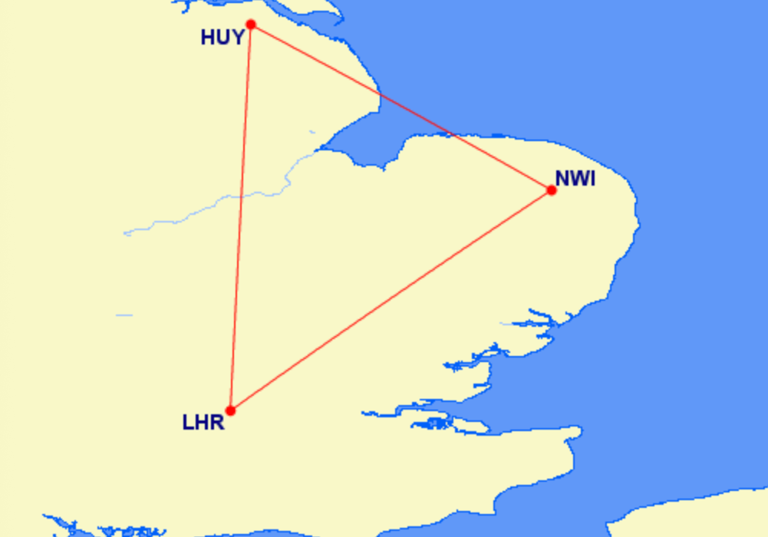
Short hops of that kind of length, which could be achieved in a couple of hours by road, are common in the US. I am not suggesting for a moment that such air links to and from Heathrow should be brought back. But the premium for nonstop flights has surely just increased, as travellers who rely on KLM seeing their plans in tatters.
Agreed, the last example of a major European hub going into freezedown (the winter equivalent of meltdown) was 15 winters ago. At London Heathrow in December 2010, snow shut down the UK’s busiest airport for several days in the week before Christmas. Thousands of people ended up sleeping on the floor of the UK’s busiest airport for days on end, and getting on for one million had their festive travel plans wrecked.
Yet the latest bout of disruption is so serious that it weakens the appeal of the “hub-and-spoke” model that has served KLM well for decades – and strengthens the case for paying a premium for nonstop. That spells trouble for those smaller airports in eastern England and Scotland which have nailed KLM’s colours to their mast. The are surely now talking to other airlines about new international possibilities – just as their regular passengers are reconsidering their options.
US introduces $15,000 visa bond for Nigerians, others - PUNCH
The United States has introduced new travel restrictions that could require Nigerians applying for B1/B2 visas to post bonds of up to $15,000.
According to information published on the US Department of State’s website, Travel.State.Gov, the payment of a bond does not guarantee visa issuance, adding that fees paid without the direction of a consular officer will not be refunded.
Of the listed Nations, African countries accounted for 24 of the 38, including Nigeria, in the updated list released by the US State Department on Tuesday.
Visa bonds are financial guarantees required by the US State Department for certain foreign nationals from countries classified as high-risk, who are applying for B1/B2 visas for business or tourism purposes.
So This Happened (EP 361) reviews: US carries out airstrikes against ISIS targets in Sokoto 0:00 / 1:01
The implementation dates vary by country, with Nigeria’s date set for January 21, 2026.
The Department of State said nationals from the listed countries have been identified as requiring visa bonds, with implementation dates shown in parentheses.
Countries affected include Algeria (21 January 2026), Angola (21 January 2026), Antigua and Barbuda (21 January 2026), Bangladesh (21 January 2026), Benin (21 January 2026), Bhutan (1 January 2026), Botswana (1 January 2026), Burundi (21 January 2026), Cabo Verde (21 January 2026), Central African Republic (1 January 2026), Côte d’Ivoire (21 January 2026), Cuba (21 January 2026), Djibouti (21 January 2026), Dominica (21 January 2026).
Others are; Fiji (21 January 2026), Gabon (21 January 2026), The Gambia (11 October 2025), Guinea (1 January 2026), Guinea-Bissau (1 January 2026), Kyrgyzstan (21 January 2026), Malawi (20 August 2025), Mauritania (23 October 2025), Namibia (1 January 2026), Nepal (21 January 2026).
The rest are; Nigeria (21 January 2026), São Tomé and Príncipe (23 October 2025), Senegal (21 January 2026), Tajikistan (21 January 2026), Tanzania (23 October 2025), Togo (21 January 2026), Tonga (21 January 2026), Turkmenistan (1 January 2026), Tuvalu (21 January 2026), Uganda (21 January 2026), Vanuatu (21 January 2026), Venezuela (21 January 2026), Zambia (20 August 2025), and Zimbabwe (21 January 2026).
The directive states that, “Any citizen or national travelling on a passport issued by one of these countries, who is otherwise found eligible for a B1/B2 visa, must post a bond of $5,000, $10,000, or $15,000. The amount is determined during the visa interview.
“Applicants must also submit the Department of Homeland Security’s Form I-352. Applicants must also agree to the terms of the bond through the US Department of the Treasury’s online payment platform, Pay.gov. This requirement applies regardless of the place of application.”
It added that Visa holders who post bonds must enter the United States through designated airports, including Boston Logan International Airport, John F. Kennedy International Airport in New York, and Washington Dulles International Airport in Virginia.
Bonds will only be refunded when the Department of Homeland Security records the visa holder’s departure from the United States on or before the expiration of their authorised stay, when the applicant does not travel before the visa expires, or when a traveller applies for and is denied admission at a US port of entry.
This development follows the introduction of partial US travel restrictions on Nigeria a week earlier. Nigeria was among 15 mostly African countries, including Angola, Antigua, Benin, Côte d’Ivoire, Gabon, The Gambia and others that were placed under partial travel suspensions by the US government on 16 December.
In Nigeria’s case, the US cited the presence and operations of radical Islamic terrorist groups such as Boko Haram and the Islamic State in certain parts of the country, resulting in “substantial screening and vetting difficulties.”
An overstay rate of 5.56 per cent for B1/B2 visas and 11.90 per cent for F, M, and J visas was also cited as a justification for Nigeria’s inclusion. As a result, the travel suspension covered immigrant visas as well as non-immigrant categories, including B-1, B-2, B-1/B-2, F, M, and J visas.
MARKET NEWS

No Record Found





