Travel News
EU gives countries entry/exit system 'flexibilities' to combat airport delays
Story by

The automated IT system will register non-EU nationals, including UK citizens, entering the Schengen Area, which includes most of the EU, plus Iceland, Norway, Liechtenstein and Switzerland.
Travellers will be required to register biometric details, including fingerprints and photographs.
The new system was first launched in October 2025, but airports and ports initially had until April 2026 to fully implement the technology as a mandatory requirement.
However, the EU has now made the decision to give 29 participating countries a more flexible timeline for the new border system's introduction until early September.
According to Mark Lammert, the European Commission's spokesperson for internal affairs, the 'progressive deployment' of the EES will end on 9 April, 2026.
He added: 'The EES regulation foreees already certain flexibilities for member states for the period after the completion of the roll-out in April this year.
'After the completion of the roll-out, member states will still be able to partially suspend EES operations, where necessary, during a period of an additional 90 days, with a possible 60-day extension to cover the summer peak.'
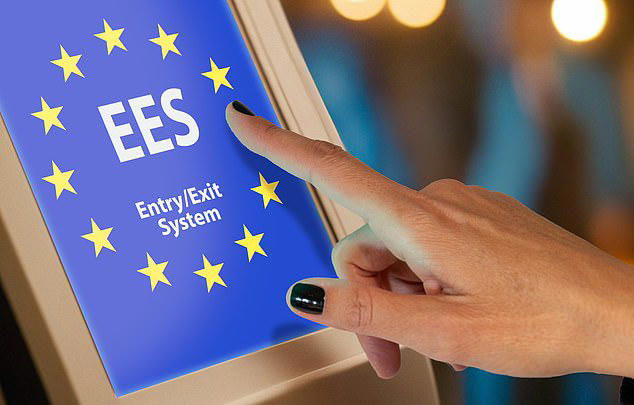

Lammert further told Business Travel News Europe that the legislation intentionally included this additional flexibility to equip member states with the resources required to handle potential holiday travel delays.
The decision may have come at the right time, as the new system has already been causing significant delays for air passengers, who have reported long lines as people navigate the processing procedures for the first time.
In some cases, delays have resulted in passengers missing their flights.
Over the Christmas period, processing times for passengers escalated by 70 per cent for the new checks caused by the rollout of the EU's new entry and exit system, the Airports Council International (ACI) in Brussels reported.
Other sources warned of 'serious concerns of bedlam next summer' if the chaos continued.
In addition, the new entry/exit system is causing gates to crash at Gran Canaria Airport, delaying flights on December 30, 2025 and January 10, 2026.
A Daily Mail writer, who was travelling to the airport at the time, explained: 'The European entry/exit system caused all the passport gates to crash on my way into Gran Canaria AND the way out.
'It delayed my flight back (Saturday, January 10) as obviously none of the Brits could get on the plane. They had to wheel out security guards to come and stamp us all, because the system completely shut down so many times.'
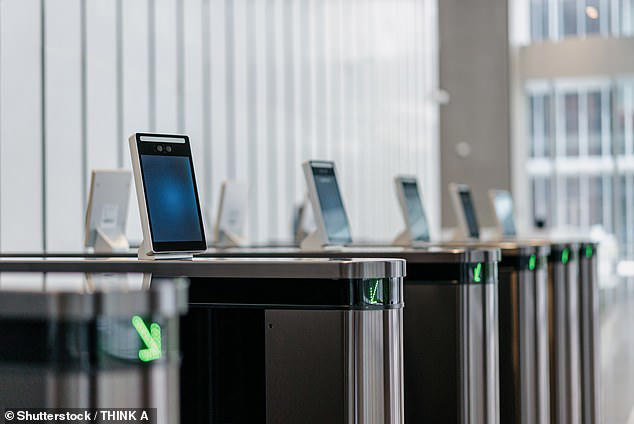


They added: 'There are queues anyway because it's quite tricky for a lot of people to master the finger printing. But when it all went red a second time, they just had to send us to security and abandon the finger printing.
'Then on the way back (January 10) the same thing happened right in front of the gate - so we could all see our planes boarding. Nail biting!'
In January, Lisbon airport was also reinforced with soldiers trained as border guards to reduce waiting times after security flaws led to the European Entry Exit System (EES) digital border rollout being suspended a month before in December 2025.
24 members of the National Republican Guard were stationed in the arrivals area at Humberto Delgado Airport, a measure approved by the government, a news agency in Portugal reported. It is not known how long the country's GNR soldiers will remain on duty.
Use of Irish airport for US deportation flights to Israel called ‘reprehensible’ - THE GUARDIAN
Politicians in Ireland have said the use of an airport in County Clare by planes deporting Palestinians from the US to Israel is “reprehensible”.
A private jet owned by the Donald Trump donor Gil Dezer was chartered by US Immigration and Customs Enforcement (ICE) for two separate flights that took detainees to Israel, a Guardian investigation revealed this week.
The flights left the US on 21 January and 1 February. Both made refuelling stops at Shannon airport in the west of Ireland.
Dezer’s family property company has built a series of Trump-branded residential towers in Miami. He recently spoke of his “love” for the US president, with whom he claims to have had a 20-year friendship.
Some of those onboard the flights on Dezer’s jet said they had their wrists and ankles shackled for the duration of the journey. After arriving in Tel Aviv, they appear to have been taken to the Israeli-occupied West Bank.
The Irish government said in a statement that as the flights stopped in the country for “non-traffic purposes” and were “not picking up or setting down passengers” they did not require prior approval from its transport department.
However, on Friday, opposition politicians expressed concern to the Irish Times about the practice.
Duncan Smith, foreign affairs spokesperson for the Labour party in Ireland, said: “It is absolutely reprehensible that any ICE deportation flights would be allowed stop and refuel in Shannon. The taoiseach and minister for transport must intervene and ensure this ends.” He added: “Ireland cannot in any way be complicit in these ICE flights.”
Roderic O’Gorman, leader of the country’s Green party, said that it was “deeply disturbing” to learn “that Shannon is being used to facilitate the cruel actions of Donald Trump’s ICE”.
Patricia Stephenson, foreign affairs spokesperson for the Social Democrats, said the government “must make a statement on whether it knowingly facilitated these flights”. She told the Irish Times that she believed the human rights of those onboard had been violated.
Dezer’s aircraft was chartered via Journey Aviation, a company based in Florida that is regularly used by the US authorities to source private jets. It declined to comment on the flights to Israel.
According to Human Rights First (HRF), which tracks deportation flights, Dezer’s jet – which he has described as his “favourite toy” – was first chartered for removal flights last October. The organisation said the plane had been used to fly detainees to Kenya, Liberia, Guinea and Eswatini, before its recent trips to Israel.
One of those onboard the first flight was Maher Awad, 24. Originally from the West Bank, he has lived in the US for almost a decade. He has a partner and baby in Michigan.
“They dropped us off like animals on the side of the road,” Awad said. “We went to a local house, we knocked on the door, we were like: ‘Please help us out’.”
In an email, Dezer told the Guardian he was “never privy to the names” of those who travelled onboard his jet when it was privately chartered by Journey, or the purpose of the flight. “The only thing I’m notified about is the dates of use,” he said. He did not respond to further questions about the use of his jet by the Trump administration to deport Palestinians through Israel.
Aviation industry sources have estimated the flights would have cost ICE between $400,000 and $500,000.
A spokesperson for the US Department of Homeland Security (DHS) did not answer questions about the deportation flights to Israel, but said: “If a judge finds an illegal alien has no right to be in this country, we are going to remove them. Period.”
Cuba Begins Shutting Resorts as Fuel Crunch Hits Tourism
US President Donald Trump’s efforts to shut off fuel shipments to Cuba are starting to cut into parts of its crucial tourism industry.
At least two large beach resorts on Cayo Coco, on the northern coast of the Caribbean nation, will be closing as soon as this weekend due to gasoline shortages, employees reported Friday.
A worker at Mojito Cayo Coco said the resort was shutting down because there wasn’t enough fuel for employees to get to work. Instead, about 200 guests will be transferred to Sol Cayo Coco about 30 miles away.
The worker, who asked not to be identified for fear of retaliation, blamed Trump’s sanctions and said many of his colleagues were losing their jobs. In more than two decades at the hotel, he said he’d seen temporary shutdowns for multiple hurricanes but never for non-weather-related disasters.
The front desk at Sol Cayo Coco confirmed it would be receiving guests from Mojito and Tryp Cayo Coco, which combined have about 850 rooms. Calls and messages to Mojito and Tryp weren’t returned. Attempts to contact Melia Hotels, which operates the Tryp and Sol, were unsuccessful.
Cuba’s government confirmed Friday night it was implementing an “efficiency and facility consolidation plan” in the tourism sector as part of broader contingency measures to address the US threats to its fuel supply. By keeping some hotels operating, the government said it hoped to capture as much external revenue as possible during the high season.
WestJet Airlines Ltd. and Sunwing Vacations, which are among the travel providers that send hundreds of thousands of sun-seeking Canadians to Cuba at this time of year, said they are closely monitoring the situation and will continue to follow the direction of the Canadian government.
“Cuban authorities have unilaterally decided to regroup certain travelers in hotels with higher occupancy levels to help ensure service continuity and overall service quality,” Canadian airline and vacation provider Transat AT Inc. said in a statement. “They have confirmed that these properties remain operational and continue to meet their usual standards.”
Canada changed its travel guidance on Cuba to “exercise a high degree of caution” earlier this week, citing the energy crisis and shortages of basic goods.
In early January, Washington effectively cut off fuel shipments to Cuba from its top ally Venezuela. Trump has since threatened to slap tariffs on nations that send oil to the island.
Cuba Begins Shutting Resorts as Fuel Crunch Hits Tourism - BLOOMBERG
US President Donald Trump’s efforts to shut off fuel shipments to Cuba are starting to cut into parts of its crucial tourism industry.
At least two large beach resorts on Cayo Coco, on the northern coast of the Caribbean nation, will be closing as soon as this weekend due to gasoline shortages, employees reported Friday.
A worker at Mojito Cayo Coco said the resort was shutting down because there wasn’t enough fuel for employees to get to work. Instead, about 200 guests will be transferred to Sol Cayo Coco about 30 miles away.
The worker, who asked not to be identified for fear of retaliation, blamed Trump’s sanctions and said many of his colleagues were losing their jobs. In more than two decades at the hotel, he said he’d seen temporary shutdowns for multiple hurricanes but never for non-weather-related disasters.
The front desk at Sol Cayo Coco confirmed it would be receiving guests from Mojito and Tryp Cayo Coco, which combined have about 850 rooms. Calls and messages to Mojito and Tryp weren’t returned. Attempts to contact Melia Hotels, which operates the Tryp and Sol, were unsuccessful.
Cuba’s government confirmed Friday night it was implementing an “efficiency and facility consolidation plan” in the tourism sector as part of broader contingency measures to address the US threats to its fuel supply. By keeping some hotels operating, the government said it hoped to capture as much external revenue as possible during the high season.
WestJet Airlines Ltd. and Sunwing Vacations, which are among the travel providers that send hundreds of thousands of sun-seeking Canadians to Cuba at this time of year, said they are closely monitoring the situation and will continue to follow the direction of the Canadian government.
“Cuban authorities have unilaterally decided to regroup certain travelers in hotels with higher occupancy levels to help ensure service continuity and overall service quality,” Canadian airline and vacation provider Transat AT Inc. said in a statement. “They have confirmed that these properties remain operational and continue to meet their usual standards.”
Canada changed its travel guidance on Cuba to “exercise a high degree of caution” earlier this week, citing the energy crisis and shortages of basic goods.
In early January, Washington effectively cut off fuel shipments to Cuba from its top ally Venezuela. Trump has since threatened to slap tariffs on nations that send oil to the island.
Canada's economy lost 25K jobs in January but unemployment drops to 6.5% amid shrinking workforce - YAHOO FINANCE
"Mixed bag" report unlikely to sway Bank of Canada on rates, economist says
BY John MacFarlane Senior Reporter
Canada’s labour market lost a net 24,800 jobs in January, but the unemployment rate dropped to 6.5 per cent as fewer people looked for work, according to Statistics Canada data released on Friday. Economists had expected the Canadian economy to add 7,000 jobs and the unemployment rate to remain at 6.8 per cent, according to consensus estimates published by the Bank of Montreal.
"Overall, today's employment report was very much a mixed bag, with both employment and unemployment apparently declining in the same month," CIBC economist Andrew Grantham said in a note to clients after the release. "As a result, we doubt this will have much impact at the Bank of Canada, and it doesn't change our view that interest rates will be on hold for the remainder of this year."
TD economist Andrew Hencic pointed to "healthier" details in the report, in particular that the net loss was in part-time jobs (-70,000) but full-time positions rose 49,000. In the past year, Canada has added a net 149,000 full-time jobs, Hencic said, and dropped 14,000 part-time positions.
But Hencic also saw little to sway the Bank of Canada (BoC) from the current policy rate.
"The unemployment rate suggests the labour market is better than expected — but not necessarily tight," Hencic wrote. "An unemployment rate of 6.5 per cent is still above a long-term level associated with stable inflation. Coupled with the uncertainty about the supply side of the economy, and the prospects for trade, the BoC is likely content to watch things play out."
By age and gender, the losses were concentrated among "core-aged" women (those aged 25 to 54), with 27,000 jobs lost. Other age categories were essentially unchanged, Statistics Canada said. Fewer job seekers in most demographic categories, however, meant unemployment rates fell broadly. Unemployment among core-aged women dropped 0.2 percentage points to 5.7 per cent, with 23,000 fewer in that group seeking work than in December. The unemployment rate for core-aged men fell 0.6 percentage points to 5.4 per cent, the lowest since July 2024 — but that was also due to a decline in those looking for jobs, with 49,000 fewer than in December.
However we got here, the reality is that the jobless rate is now tied for the lowest over the past 18 months, and has somehow dropped since the start of the trade war a year ago.Douglas Porter, BMO chief economist
In a recent note, RBC economist Nathan Janzen wrote that demographics and current immigration policy could allow the unemployment rate to fall even with “modest” job losses.
“Canada’s breakeven employment growth rate" — the number of new jobs needed to keep the unemployment rate stable — "is on track to be slightly negative," he wrote, suggesting an average loss of 10,000 jobs per month would still maintain a constant unemployment rate.
The workforce shrank by 119,000 people overall, one of the highest drops outside the pandemic, noted BMO chief economist Douglas Porter, a change "driven by slowing population and a steep drop in the participation rate" — the proportion of the working-age population actually working or seeking employment.
The participation rate's 0.4 percentage point drop, to 65 per cent, "was not driven by a wave of people retiring at the start of the year as the rate for those 55 and over actually nudged up in January," Porter wrote. "However we got here, the reality is that the jobless rate is now tied for the lowest over the past 18 months, and has somehow dropped since the start of the trade war a year ago."
Brendon Bernard, senior economist at Indeed Canada, suggested that looking at movements within the working-age population (ages 15 to 64) could offer a clearer picture in the "mixed" report. The job market for that group has been largely stagnant.
"Overall the share of working-age Canadians with a job was flat at 74.5 per cent for a third consecutive month, up somewhat from Q3, but matching where it stood a year earlier," he said. "Without an economic spark on the horizon to kickstart hiring, and sectors like manufacturing taking another hit in January, we’re treading water for the time being."
Jobs were lost in manufacturing (-28,000 positions, down 1.5 per cent), educational services (-24,000, down 1.5 per cent) and public administration (-10,000, down 0.8 per cent). There were gains in information, culture and recreation (+17,000 up 2.0 per cent), business, building and other support services (+14,000, up 2.1 per cent) and agriculture (+11,000, up 4.5 per cent).
Other financial industry experts said a drop in unemployment driven more by demographic changes than job creation meant the financial situations of many Canadians remained difficult. "Because it’s being driven more by slower population growth than stronger hiring, many households aren’t seeing real relief," said Stacy Yanchuk Oleksy, CEO of credit counselling agency Money Mentors. "With rising costs and uneven wage growth, we've seen more families leaning on credit and accumulating debt to cover everyday expenses."
In December, 8,200 jobs were added, essentially flat and down substantially from the 54,000 added in November. The December unemployment rate was 6.8 per cent, up from 6.5 per cent the previous month, as the number of people actively seeking jobs increased.
John MacFarlane is a senior reporter at Yahoo Finance Canada. Follow him on X @jmacf.
EU's new entry/exit system has had a shaky start. Here’s what travellers need to know - EURONEWS
The EU’s long-delayed Entry/Exit System (EES) for non-EU nationals began being phased in last October.
The gradual scale-up of the biometric border technology has already experienced teething problems, causing significant delays for air passengers.
A survey by Holiday Extras last year found that 82 per cent of respondents were unclear as to how the new EES will impact trips, with 35 per cent unaware that the new rules come this weekend.
Nearly one in five holidaymakers has already changed or cancelled travel plans, with many citing worries about border delays.
If you are due to travel to the EU soon, here's how you can prepare to make the process easier.
Will the EES be in place at all airports this summer?
The EES is being introduced to bolster border security and identify travellers who overstay their permitted time in the Schengen Area (90 days within a 180-day period).
The new system requires Europe's border crossings to have dedicated infrastructure installed, a process which has proved complicated.
Many airports now have this technology in place, which means visa-exempt travellers from the UK, US and other non-EU countries must register their biometric data at dedicated kiosks.
Initially, the threshold for EU countries to register third-country arrivals was set at only 10 per cent. From 9 January 2026, this increased to 35 per cent.
US visa: Nigerian students’ enrolment drops 25% in 2023/24 - BUSINESSDAY
Once one of the fastest-growing sources of international students in the United States, Nigeria has experienced a significant decline, with enrollment dropping by over 25 per cent in the 2023/24 academic year amid tightened visa conditions.
According to travel.state.gov, a US Department of State report, the number of Nigerian students who got their academic and vocational (F1 and M1) visas approved from October 2022 to September 2023 Fiscal Year (FY) was 7,528.
From October 2023 to September 2024 Fiscal Year (FY), the report indicates a drop in the number of applicants whose F1 and M1 were approved to 5,679, which amounts to over 25 percent fall.
BusinessDay gathered that from 2026, Nigerians, South Africans, Kenyans, Egyptians, Moroccans, Ethiopians, and several other African nationals will face higher application fees, stricter documentation requirements, and longer processing times under a new US travel visa regime.
The revised programme, announced by the US government, comes in response to rising visa demand across Africa and growing security concerns.
Following the prevailing US travel restrictions and visa hurdles, many Nigerian students are increasingly looking beyond America towards Europe for international education.
Olubunmi Apologun, a Nigerian student in the United Kingdom, explained that beyond the travel restrictions, issues such as rising costs, strict immigration policies, and the desire for post-study work opportunities, among others, are pushing many towards European destinations.
Many Nigerian students are going to countries that offer them clearer pathways to permanent residency, such as Germany, Finland, or other European Union countries.
Nigerian students’ interest in the US dropped by over 50 percent since the expansion of Donald Trump’s travel ban, with European destinations benefiting most as students turn elsewhere.
Search interest in America among Nigerians dropped immediately following the announcement of the US travel ban in December 2025, with levels more than half of what they were during a high point in August last year, according to Keystone Education Group data.
“We continue to see audiences responding very quickly to actions and announcements from the US government, and Nigeria is no exception,” said Mark Bennett, Keystone’s VP of research and insight.
“These announcements don’t discourage Nigerians from studying abroad, but they will prompt them to look for opportunities elsewhere. Crucially, that doesn’t have to mean elsewhere in the big four,” added Bennett.
European destinations absorb the most Nigerian student interest, pivoting away from the US, with France and Italy seeing search growth of 40 percent and 33 percent respectively, during the same period.
China has also seen a 17 percent boost in interest from Nigerian students, while interest in Australia grew by 21 percent.
The high cost of education in the US, combined with the depreciation of the naira, makes European higher education institutions with low or no tuition more attractive.
Students are favouring European nations with lower tuition and higher affordability, such as France (40 percent surge in interest), Italy (33 percent surge), Belgium, and Germany.
However, tertiary institutions in the USA remain a top destination for affluent Nigerian families, while the wider student demographic is swiftly seeking alternatives in Europe, Canada, and China.
In the face of the new development, many Nigerian students are finding it difficult to obtain student visas recently.
Peter Bahago, a Nigerian student who pursued his international studies, speaking on the choice of Europe, said, “I have no regret about travelling to Europe, the UK in particular, to further my education.
Most, if not all, universities in Europe, the UK in particular, provide options for students to work part-time while studying, helping them gain work experience and support themselves financially.”
“Suffice it to say that only scholarly work can burrow deep to unearth the benefits international students enjoy from studying in Europe.”
The new British passport dual citizenship rules, explained
British dual citizens will face tough updated rules when entering the UK from overseas from later this month, under new government guidelines.
From 25 February, dual citizens are being "strongly advised" to have a current British passport to ensure they can enter the country – and not solely the passport of the country where they hold dual citizenship.
It means that any British national attempting to enter the country could be refused entry unless they present their British passport or a certificate of entitlement to prove their status.
The changes, which apply to all British and Irish dual citizens abroad, are part of the Home Office's rollout of the Electronic Travel Authorisation (ETA) scheme, designed to enhance border security.
A Home Office spokesperson said: "Digitising the immigration system using ETAs ensures millions of people enjoy a more seamless travel experience to the UK.
"ETAs also give us greater power to stop those who pose a threat from setting foot in the country and gives us a fuller picture of immigration."
What are the current dual citizenship passport rules in the UK?
The UK recognises dual citizenship, allowing people to hold British nationality alongside another passport without losing their rights.
Advertisement
There has never been a strict legal requirement for British citizens to enter the country using a British passport.
As a result, dual nationals – particularly those holding passports from visa-exempt countries such as Australia, Canada or EU states – can travel to the UK on their non-British passport.
If asked, travellers are usually able to confirm their British status at the border using alternatives such as an expired British passport, a naturalisation certificate, or proof of right of abode.
A certificate of entitlement, which proves the passport holder has the right to stay in the UK, can also be used.
How are the British dual citizenship passport rules changing?
From 25 February, when the ETA scheme comes into full force, most visitors from visa-exempt countries will need to obtain digital permission to travel before departure, typically costing £16 and remaining valid for two years or until the passport expires.
While British and Irish citizens – including dual nationals – are exempt from ETAs, they will no longer be able to rely on a non-British passport to enter the UK and will have to present a valid British passport, a valid Irish passport where applicable, or by using a certificate of entitlement.
A Home Office briefing document states: "We strongly advise dual British citizens to make sure they have a valid British passport or Certificate of Entitlement, to avoid problems like being denied boarding when travelling to the UK from 25 February 2026.
"From 25 February 2026, dual British citizens who cannot produce a valid British passport or certificate of entitlement will need to have additional identity checks and will not be able to go through UK passport control until their British nationality is verified."
The certificate costs £589 when applied for from outside the UK or Ireland and must be renewed each time a new passport is issued.
A standard British adult passport costs £94.50, while an Irish passport costs €75.
Anyone without the required documents may face extra checks at the border, lose access to e-gates, or be denied boarding altogether by carriers who risk fines.
One British woman who has lived in Germany for years, told the Guardian she and many others felt the changes had not been communicated well to those living abroad and that keeping up two passports for a family was an expensive "luxury" that not everyone could afford.
"I'm really annoyed about being treated as Brexit collateral once again with this short-notice, shortsighted, arbitrary change of the rules," she said.
Another British Italian told the newspaper he had booked a flight for a work trip last week and only just discovered he could be stranded, as despite having dual nationality, he has never held his own British passport and travelled on his Italian passport.
FX for business travels soar by 366% to $672m - PUNCH
More Nigerians gained access to foreign exchange, boosting their spending on business travels by 366 per cent to $672.27m in the first nine months of 2025, up from $144.19m recorded in the corresponding period of 2024.
The figures, contained in the Balance of Payments section of the December 2025 Central Bank of Nigeria’s Quarterly Statistics, showed that spending stood at $231.7m in the first quarter of 2025, rose slightly to $234.56m in the second quarter, and moderated to $205.97m in the third quarter, bringing the nine-month total to $672.27m.
In contrast, business travel expenditure was $77.33m in Q1 2024, fell to $46.62m in Q2, and further decreased to $20.24m in Q3, culminating in $144.19m for the same period.
Business travel refers to expenditures made by Nigerian residents when they travel abroad for business purposes, such as attending meetings, conferences, training sessions, or other work-related activities.
So This Happened (EP 374) reviews: El-Rufai alleges arrest attempt, accuses Ribadu of plot 0:00 / 1:01
Payments linked to these trips, including for accommodation, local transport, and meals, are captured as outflows of funds in the BoP. Since money leaves Nigeria to pay for these services abroad, they show up as debits (negative entries) in the current account under services. Tickets and airfares are not included.
Data from the CBN indicate that travellers had more access to FX for business trips in the period under review. In turn, this reflected stronger international business engagement.
In separate interviews with The PUNCH, economic analysts and experts familiar with the matter explained that the development signalled renewed business confidence and improved foreign exchange stability.
The Director of the Centre for Promotion of Private Enterprise, Dr Muda Yusuf, said the jump in travel spending reflected improved confidence in international trade and stronger economic stability.
He explained: “An increase in business travel costs is a reflection of an improvement in confidence in international trade because there is a relationship between the frequency of travel and the volume of international business, whether it is services or merchandise, there’s always a relationship. If there is no trade, there will not be travel. If there are no international transactions that require physical movement, there will not be any travel.”
Yusuf added that the trend underscored Nigeria’s growing connectivity with the global economy, stating, “This is a reflection of the wider stability and confidence that we are seeing in the economy. And this has enabled more Nigerians to travel, to meet their business partners, and vice versa. I think this figure with respect to business travel, this is what it indicates.”
CPPE’s director observed that the country’s improved foreign exchange liquidity and exchange rate stability strengthened international trade flows in 2025 compared to previous years.
He asserted that given that the dollar is stable, there’s more liquidity in the foreign exchange markets. “So that has also given a big boost to international trade and investments,” Yusuf remarked.
A former Chairman of the Chartered Institute of Bankers of Nigeria, Prof Segun Ajibola, explained how this relationship plays into the recent figures.
Corroborating CPPE’s Yusuf, the economist noted that the increase could reflect both expanded business activities and higher travel costs.
He said, “The 366 per cent jump in expenditure could be a positive and negative development at the same time. Firstly, business travel is a cost item. It is an expense for each business organisation which could be driven by an increased level of activities, which pushes executives and others to travel purely for new business contracts, new business dealings, or by increased expansion of existing businesses, which may take them out of the country, or might involve them inviting business partners to the country at their own expense.”
The former CIBN leader added that if driven by business expansion, the rise would positively impact economic output. “It must reflect, if that is the case, it must reflect by way of enhanced business volumes, which means businesses incurring the cost. You also have higher business volumes, which will contribute to the country’s Gross Domestic Product,” he remarked.
Meanwhile, the Director-General of the Nigerian Employers’ Consultative Association, Adewale Oyerinde, said business travel spending impacts the country’s net cash outflows. He urged proportional or increased export earnings to balance the spending, which could deplete foreign reserves and widen current account deficits.
He explained, “The increased business travel prices impacting the BOP services account, which is a major part of the transaction that occurs and therefore affects the net cash outflows, could lead to depletion of foreign reserves and widening of current account deficits if not offset by a corresponding level of exports or remittances.”
Oyerinde observed that with respect to foreign exchange volatility risks, the naira remains devalued, and high prices for hotels add to the overall value to be transferred to US dollars.
He added, “Despite the Q3 2025, BOP surplus of $4.60bn, total services’ net cash outflows increased from $3.74bn last quarter, to now $4.07bn, while cash outflows associated with travel alone from Q3, now total $1.67bn, and therefore putting pressure on the external buffers with the foreign reserves now growing to $42.77bn.”
On how this improved access to FX for business travel impacts the broader economy, NECA’s DG stated that high costs lead to shrinking profit margins for companies in Nigeria.
He said, “Multinationals and exporters that depend on a global supply chain face extreme pressure due to rising hotel rates (+40 per cent in Lagos/Abuja) due to the scarcity of fuel and the unstable foreign exchange market.”
He stated that companies have two options, “either to eliminate physical travel through virtual alternatives or absorb the financial loss of high transportation inflation. Both options are likely to decrease a company’s investment capital.”
Oyerinde explained that large companies approaching significant expenditures with significant increases indicated a persistent strain on their investments.
“The continued rising cost of doing business may impact the expansion of the company or its ability to remain competitive in a high-growth Purchasing Managers Index (57.6 December 2025) but cost-compressed economy,” he concluded.
Red UK passport holders warned ahead of summer 2026 holidays - MIRROR
British holidaymakers still using old red passports are being warned ahead of summer holidays. If you're planning a sunshine escape this year, it's crucial to check your passport before departure due to strict entry requirements abroad.
Many countries demand your passport remains valid for a further six months before you set off on international travel. Known as the 'six-month validity rule', many people still holding pre-Brexit red passports may find their documents don't have sufficient time remaining.
Some countries, including all within the Schengen area, have a three-month passport requirement. This means travellers can enter these destinations if their passport remains valid for at least three additional months.
If you're still carrying a red passport it's important to check its expiry date. Since Brexit, your passport must be less than 10 years old upon arrival in the EU, with its expiry date falling at least three months beyond your planned departure from the EU.
Most people, quite reasonably, presume an adult passport lasts a decade, but if yours was issued before October 1, 2018, additional months may have been added to its expiry date if the previous passport was renewed before it completely expired.
You can check whether your passport meets the validity requirements for your journey on GOV.UK. Simply search for your destination country and select 'entry requirements', as reported by Wales Online.
Additionally, you're limited to a maximum stay of 90 days within any six-month period. During Britain's EU membership, there were no such time restrictions on stays.
Some of the countries with a six-month passport rule include the USA, Thailand, United Arab Emirates, Australia, China, and Indonesia.
MARKET NEWS

No Record Found