




Market News
Iran ‘plans permanent break from global internet’
Iran is working to permanently sever itself from the global internet, according to a report.
Activists fear the Islamic Republic will capitalise on the current communications blackout, imposed to crush recent protests, to begin instituting their plans for a sealed intranet.
The plan would move beyond mass internet censorship for a “new, far darker strategy – absolute digital isolation”, according to the report by Filterwatch, which supports internet freedom and freedom of information in Iran and the Middle East.
“We have entered a new era, where connectivity is no longer a right but a government-granted privilege,” the report said.
Only those who had security clearance or had passed government checks would have access to the broader internet, according to the plans.
Other Iranians would only have access to a hermetic, parallel version of the internet cut off from the outside world, the report said.
Iranian authorities plunged the country of 90 million people into a communications black hole last Thursday, a restriction that remains in place. Phone lines went down, as did internet connections, while even gas used for cooking and heating was cut to some homes.
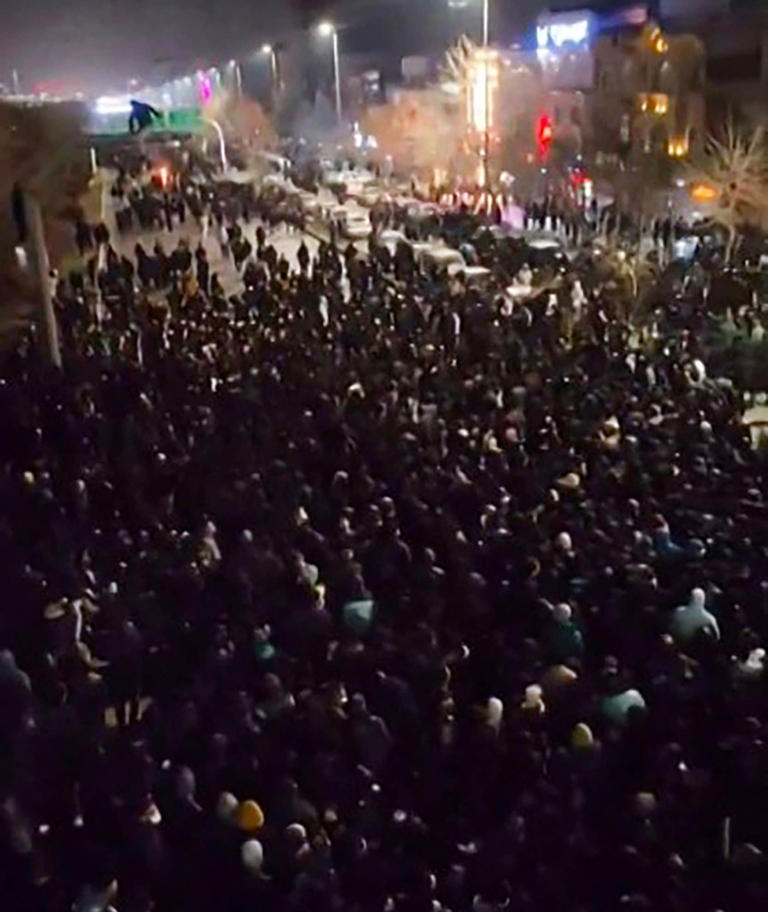
The internet shutdown is part of a wider crackdown on mass protests that began in late December.
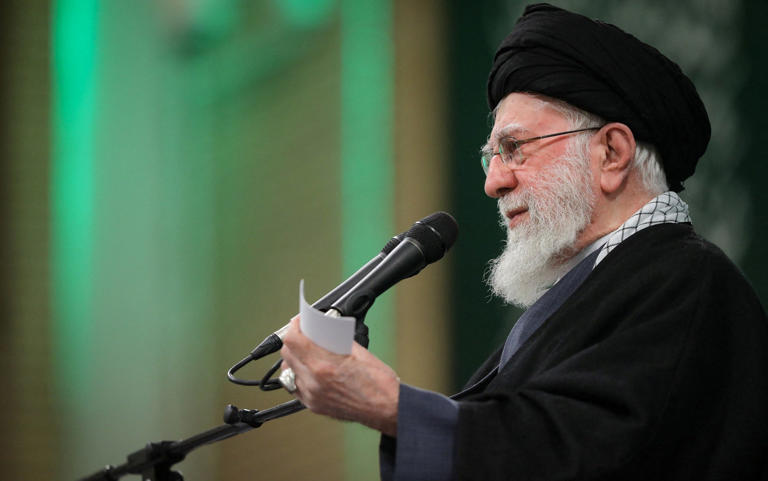
On Saturday, Ali Khamenei, Iran’s supreme leader, accused Donald Trump of orchestrating the unrest.
“We consider the US president a criminal for the casualties, damages and the slander he inflicted on the Iranian nation,” said Khamenei, according to Iranian state media.
Iran has sought to cast the demonstrators as “terrorists”, with Khamenei alleging that the US and Israel had instructed them “on how to spread fear, carry out destruction, and sabotage public order, and they were also given substantial financial support”.
Earlier this week, Mr Trump had encouraged protesters in Iran to continue, posting online that “help is on its way”.
For now, diplomatic pressure by Middle Eastern nations appears to have deterred the US president from ordering military action, which could be hugely destabilising in the region. But the White House has emphasised that “all options remain on the table”.
As of Saturday morning, some people were able to send text messages, said Iranians entering Turkey at a land border crossing. Many hoped to get online after more than a week of being cut off from the outside world.
But most of the country is still blanketed by the communications blackout, stoking fears that Iranian authorities would use it to hide the bloody scale of its crackdown. Limited information has filtered out because of the shutdown.
HRANA, a US-based human rights group, said it had verified 3,090 deaths, including 2,885 protesters. Iranians who fled abroad in recent days said they thought the real death toll could be in the tens of thousands. “The regime killed so many people,” an Iranian tea merchant said.
“Don’t go to Iran – the situation is too volatile,” another person said, unprompted, near the Turkey-Iran border. “There have been too many deaths.”
The regime’s heavy-handed security response – violent clashes with protesters, mass detentions, ongoing security patrols, extra checkpoints, an 8pm curfew – seems to have halted the protests over recent days. State media said 3,000 arrests had been made.
But experts noted that widespread deployment of the security forces was unsustainable in the long term, meaning protests could flare up again as anger peaks against the government over its crackdown.

Concerns abound that the internet shutdown will remain for many weeks to ensure no protests occur around upcoming sensitive dates, including the end of the traditional 40-day mourning period in Iran following protester deaths, and Nowruz, the new year holiday, in March.
The communications blackout is likely to exacerbate the country’s economic woes.
Paradoxically, global sanctions against Iran may mean its potential sealed intranet plans will not have too much impact in the long run, as the country is already cut off from many countries and economies.
An inability to make calls or get online, however, is seriously affecting people’s livelihoods and well-being.
One man told The Telegraph that he was unable to call emergency services when his mother suddenly fell ill. Road closures also meant he was barred from driving her anywhere to seek medical help.
Desperate, he begged regime security to take her somewhere for help. To his surprise, they eventually agreed, but he has been unable to receive updates about her condition while she is in hospital. “It was dangerous to approach them, but what could I do?” he said. “She could have died.”
“We can’t speak to our families,” said another person. “It’s like we are in a war – only during wartime are communications cut like this.”





