
Market News
Nigeria, Benin seek stronger cooperation on border trade, security - VANGUARD
.Customs, traditional rulers urge cooperation, responsible reporting
By Evelyn Usman
The Nigeria Customs Service has called for stronger border controls, intelligence sharing and digital verification between Nigeria and the Republic of Benin to curb smuggling, protect government revenue and prevent illicit imports from undermining local manufacturers.
The Acting Controller of the Ogun I Area Command of the Nigeria Customs Service, Idiroko, Deputy Comptroller Abdulhamid Ibrahim, warned that smugglers who evade import duties enjoy an unfair price advantage over legitimate businesses, threatening domestic production, investment and employment.
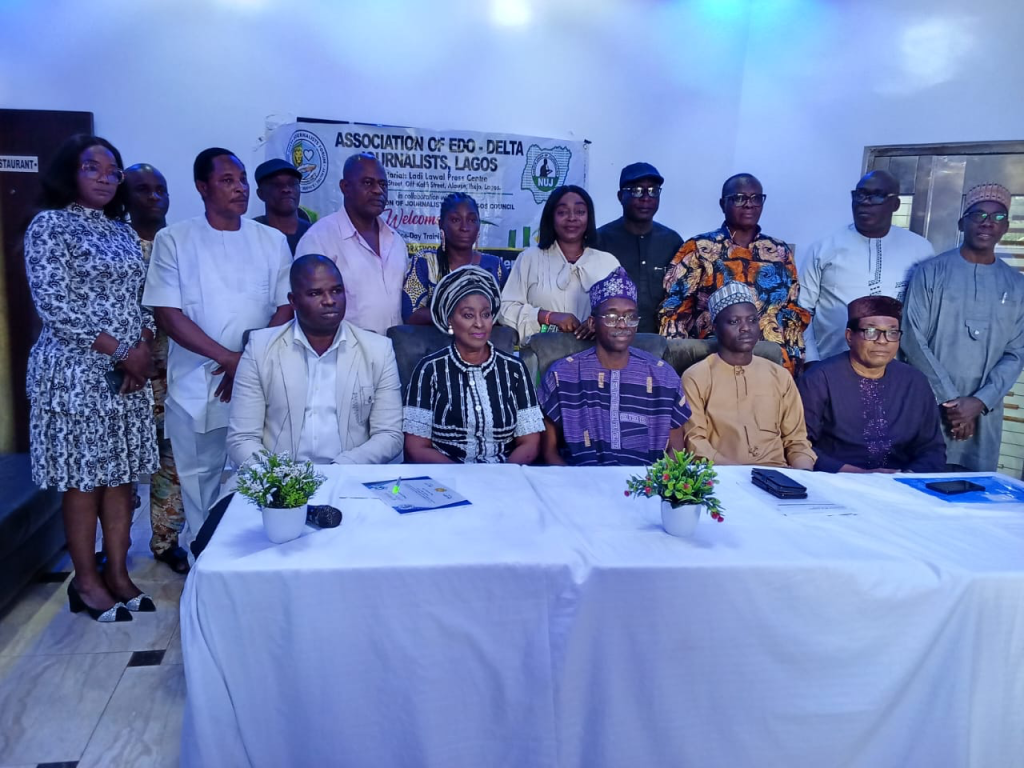
Ibrahim, who was represented by CSC FO Shaibu, spoke on Wednesday at a one-day training workshop organised by the Edo-Delta Journalists Forum in Igolo, Republic of Benin, with the theme “Journalism Beyond Borders: Reporting Cross-Border Relations, Trade, Security, Culture and Emerging Technologies in the Nigeria-Benin Republic Corridor.”
Using noodles as an example, he explained that a Nigerian manufacturer could sell a carton for N5,000 after accounting for production costs, electricity, workers’ salaries and taxes, while traders bringing similar products through unofficial routes could sell theirs for N3,000.
He warned that the price disparity could weaken local manufacturers and make it difficult for businesses that comply with tax and import regulations to remain competitive and profitable.
The Customs official said smuggling also deprived the Federal Government of import duties and other applicable revenue. He called for stronger enforcement and intelligence sharing between the two countries to tackle illicit trade.
He advocated more effective verification of import documents and confirmation of duty payments, particularly for vehicles imported through the Republic of Benin before they are registered or released into the Nigerian market.
Ibrahim warned that smuggling was not limited to land borders, noting that inadequate surveillance at seaports and airports could also facilitate the movement of illicit goods.
He called on the Customs services of both countries to strengthen intelligence gathering, digital verification and background checks on companies involved in importing and receiving goods.
He also advocated investment in specialised personnel and laboratory facilities to test imported products and establish their compliance with safety and quality standards, in collaboration with relevant regulatory agencies.
According to him,” improved product verification and credible comparisons between locally manufactured and imported goods could boost consumer confidence in Nigerian products and support domestic manufacturing”.
He urged journalists to investigate and report the economic impact of smuggling, including revenue losses and unfair competition, stressing that coordinated action by government agencies, businesses and border communities was necessary to address the problem.
Beyond enforcement, stakeholders at the workshop called for a balance between border security and the facilitation of legitimate trade, warning that excessive restrictions could disrupt commercial activities and livelihoods in border communities.
Diplomacy, culture key to border peace — Benin official
In his remark at the training workshop, the Permanent Secretary of the Inter-Border Forum, Dr. Bonny Abisogun Botokun, called on Nigeria and the Republic of Benin to deploy culture, traditional institutions and local diplomacy to resolve conflicts along their shared border, saying the two countries were bound by deep-rooted historical, family and cultural ties.
Botokun said the international boundary should not be viewed merely as a line separating two countries or as a zone associated with insecurity, smuggling and human trafficking.
“The people living in the borderline area, they don’t see it as a separation, because they believe that it is the same community that is divided into two,” he said.
He noted that the peculiar circumstances of border communities often made the strict application of immigration and trade regulations difficult, particularly for residents whose families, businesses and cultural activities straddle the two countries.
While acknowledging the responsibility of security agencies to monitor entry into their respective countries, he urged the authorities to consider the circumstances of border residents who might lack the resources or documentation required for regular international travel.
“Diplomacy is the key. If you use diplomacy to handle these things, you will resolve so many conflicts,” he said.
Botokun, who disclosed that he had served as Permanent Secretary since 2012, urged Nigerian and Beninese authorities to strengthen engagement with traditional rulers, saying traditional institutions could help resolve disputes before they escalated into security concerns.
“If we use the kingdom as an example, we can resolve so many conflicts without making use of guns,” he said, citing the traditional kingdom around Idiroko as an example of communities whose historical and cultural influence extended across the border.
He urged policymakers to take such realities into consideration when formulating and implementing border policies.
He also warned that attempts to completely restrict traditional festivals and cultural practices involving communities on both sides could encourage residents to seek informal routes across the frontier.
He stressed that effective border security should be combined with an understanding of the social and cultural realities of border communities.
Botokun recalled that after assuming office in 2012, he held meetings with Nigerian government authorities, traditional rulers, mayors and other stakeholders. These engagements, he said, contributed to the establishment of an Inter-Border Forum to address common challenges.
He described the forum as a platform for local diplomacy and the prevention of disputes between the two countries.
“The teeth and the tongue have to live together in the mouth,” he said, emphasising the need for the neighbouring countries to coexist despite occasional disagreements.
He said greater attention should also be paid to economic opportunities around the border, rather than treating the area solely as a security challenge.
Botokun disclosed that the Festival of Arts for Economic Development had been initiated to promote cross-border interaction under the theme, “Building Bridges Across Borders.”
He said the initiative was intended to demonstrate how border areas could become centres of economic development, cultural exchange, peace-building and regional integration.
Travellers deserve respect — Mayor
Also speaking, the Mayor of Ifoyin Municipality in the Republic of Benin, Fatai Amusa, urged security personnel manning border posts to treat travellers with respect and professionalism, warning that misconduct by uniformed officers could undermine public confidence and relations between neighbouring countries.
Recounting his experience at a border crossing, Amusa said a uniform symbolised the authority and dignity of the country an officer represented and should not be used to intimidate or discriminate against travellers.
“The uniform represents the flag of the country,” he said, urging officers to treat travellers with respect, irrespective of their appearance, background or social status.
He also urged journalists to exercise caution when reporting incidents involving immigration officers and other security personnel, warning that inaccurate or poorly presented information could trigger unnecessary tension between the two countries.
Amusa called for responsible journalism, professionalism among border officials and improved communication to prevent minor confrontations from escalating into wider disputes.
Deputy mayor seeks stronger cooperation
The Deputy Mayor of Ifoyin Municipality, Falola Marufatu Ileola, called for stronger cooperation between Nigeria and the Republic of Benin, particularly in addressing border-related challenges, migration and information gaps that could affect relations between the neighbouring countries.
Emphasising information-sharing and the role of journalists in promoting mutual understanding, she said: “Cooperation between countries is important, especially when it comes to sharing information. We are talking about collaboration between countries, particularly at the borders, and also the role of journalists in promoting cooperation.”
She noted that the way information was disseminated could influence public perception and cooperation between states.
“Beyond the issues affecting individual countries, there are people and situations that influence public perception. Sometimes, the information circulated can affect cooperation between states, particularly when it concerns movement across the border between our two countries.”
Ileola, who referred to migration during her remarks, stressed the need to understand the experiences of people crossing borders.
“Sometimes, we need to understand the experiences of people who cross these borders. We should not have to prove that we are civilised before our views can be understood,” she said, according to a reconstruction of her remarks.
She also drew attention to information gaps in the Sahel region and other border areas, noting that residents could struggle to obtain reliable information through official channels.
“In the Sahel region, we often find that there is not enough information available. When people cannot access the appropriate official channels to obtain information, the press and public awareness campaigns can help bridge that gap.”
She added: “We must recognise that people are aware of what is happening around them, but they do not always have access to the information they need.”
The Deputy Mayor urged journalists and other stakeholders to promote responsible reporting and better communication to ensure that isolated incidents did not create unnecessary tension between Nigeria and the Republic of Benin.
We celebrate each other’s Independence Day together — Onitoyin
Earlier, the visiting journalists paid a courtesy visit to the Onitoyin of Ifoyin land, Oba Rafiu Adebowale, who highlighted the historical ties between border communities and the role of traditional rulers in sustaining peaceful coexistence.
The monarch, who ascended the throne 22 years ago, said Nigerians living in his domain continued to enjoy the support and protection of the traditional institution, provided they were not involved in criminal activities.
According to him, families, businesses and social activities linked the communities beyond the boundary separating the two countries.
“We have many Nigerians here. Some of them are married to our people. Some of the businesses here are run by Nigerians, particularly the Ibis who run hotels and beer parlours. They are unique people,” he said.
The monarch said the close relationship between the people extended to the celebration of national events, despite their belonging to different countries.
“We celebrate each other’s Independence Day together because we are the same Africans,” he said.
Oba Adebowale said traditional rulers had a responsibility to promote understanding, tolerance and peaceful relations among their subjects, particularly in border communities where the movement of people and goods was part of daily life.
He added that maintaining peace required cooperation among traditional institutions, government agencies and residents, stressing that people on both sides had more in common than the boundary separating them.
Forum tasks journalists on cross-border reporting
In his welcome address, the Protem Chairman of the Edo-Delta Journalists Forum, Mr. Tunde Umar-Daniah, said the organisation was established on the conviction that journalism should go beyond routine news reporting to contribute to societal development, regional integration, national security and cross-border diplomacy.
He said the forum’s maiden training workshop was part of efforts to strengthen journalists’ capacity to report issues affecting border communities, particularly cross-border trade, security, diplomacy and relations between neighbouring countries.
Recalling the shared history of Edo and Delta states under the former Bendel State, Umar-Daniah said their common heritage should serve as a foundation for cooperation and development.
“Bendelites was not just a phrase; it was a testament to brotherhood, nobility and pioneering achievement,” he said.
He identified peaceful coexistence, mutual socio-economic growth, youth empowerment, investment promotion, security cooperation and boundary diplomacy as areas requiring sustained attention from governments, community leaders, professionals and the media.
The chairman said journalists had a responsibility to examine public policies beyond official pronouncements and political promises, while ensuring that citizens were informed about decisions and programmes affecting their lives.
The training examined emerging demands of contemporary journalism, including digital verification, open-source intelligence, emerging surveillance technologies and responsible reporting of cross-border security issues.
It also addressed the economic realities of modern journalism, with discussions on digital publishing, data analytics, content monetisation and the financial empowerment of media practitioners.
Umar-Daniah said the forum intended to sustain engagement with relevant institutions in Edo and Delta states through policy dialogue, regular interactions and constructive media engagement.
He said the choice of Igolo, a border community in the Republic of Benin, provided an opportunity for journalists and stakeholders to explore how professional reporting could promote cooperation, improve public understanding of cross-border issues and contribute to peace and security.